Please Wait . . .
0

Quality Standards Certification

By - Priya
17.06.26 06:38 PM

BIS Certification: The Only Proven Standard of Needle Quality in India

Walk into any needle dealer’s shop and you will hear many claims. “German quality.” “Japanese technology.” “Loop Control.” “SAN 10.” There is a simple question that cuts through all of them: how do you know whether any of these claims are true? The answer is standards. And in India, that standard is BIS. 
A quality sewing machine needle is not defined by advertising claims, technical-sounding terms, or attractive packaging. It is defined by measurable engineering standards. In India, that standard is BIS. In Japan, it is JIS. Internationally, it is ISO. BIS certification is the most objective proof of needle quality available to a buyer in India today.

TWO SEPARATE STANDARDS

One for Industrial. One for Household. Both Matter

BIS does not have a single needle standard. It has two — because industrial and household needles are different products, serving different machines, operating under different conditions, and requiring different engineering specifications.
IS 15169:2002 covers the needles used in garment factories, leather goods units, embroidery operations, and all other commercial sewing environments — DBx1, HAx1, UY128, DCx27, and others — operating at speeds of up to 10,000 stitches per minute. 
IS 2181:2025 covers the 130/705 system needles used in domestic sewing machines — Usha, Janome, Singer, Brother, and all other home sewing machines sold in India. Established in 2025, it brings household needles under the same rigorous framework that has governed industrial needles since 2002.
Both standards are aligned with the corresponding JIS standards for needles — the Japanese Industrial Standards that are among the most demanding needle quality benchmarks in the world.

“Having certification under both standards is significantly more demanding than certification under either one alone. It requires separate testing, separate factory verification, and continuous compliance across two distinct product categories.” 

Beissel and King are the only sewing machine needle brands in India certified by BIS for both industrial and household needles.

IS 15169:2002 · IS 2181:2025

MORE COMPLEX THAN IT LOOKS

What BIS Actually Measures

Most people see a sewing machine needle as a small piece of steel. In reality it is a precision engineering product. To verify performance, BIS evaluates seven critical parameters. A weakness in any one can lead to thread breakage, skipped stitches, fabric damage, and premature needle failure.

1. Wire Composition

S 15169:2002 and IS 2181:2025 both specify the chemical composition of the steel wire from which needles are made. This includes mandatory limits on carbon, chromium, vanadium, manganese, silicon, phosphorus, and sulphur. These elements determine strength, elasticity, wear resistance, hardness, and fatigue life. Two wires with similar carbon content but different vanadium or chromium levels can perform entirely differently in manufacturing and in use.

2. Needle Straightness

BIS limits the maximum permissible bend to only 0.10 mm. A needle that appears perfectly straight to the eye can still fail this test. Even a slight bend affects stitch formation, causes skipped stitches, increases thread breakage, and can damage the machine mechanism. Straightness is measured after all manufacturing operations are complete.

3. Tip Hardness

BIS specifies a minimum tip hardness of 750 HV (Vickers). This is not about sharpness alone — sharpness is the starting point. What matters is how long the tip retains its shape under operating conditions. At 10,000 stitches per minute, needle tip temperatures can reach 300°C within seconds. A soft tip blunts rapidly, causing larger holes, thread breakage, skipped stitches, and garment rejections.

4. Elasticity and Bending Performance

A needle must be hard enough to resist wear and elastic enough to bend under load without permanent deformation. BIS includes specific bending and breaking angle requirements. Too hard and the needle becomes brittle and breaks under lateral load. Too soft and it bends permanently, causing skipped stitches and stitch irregularity. The correct balance requires precise wire composition, heat treatment, and controlled tempering

5. Chrome Plating

BIS specifies that the chrome plating on a finished needle must be between 3 and 5 microns in thickness. Proper plating reduces friction, lowers heat generation during high-speed sewing, improves corrosion resistance, and extends service life. Plating that is too thin wears away quickly. Plating that is uneven or poorly adhered — typically caused by surface defects in inferior wire — leads to thread fraying, increased heating, and premature needle failure.

6. Eye Finish

The needle eye is where the sewing thread is most vulnerable. The thread passes through this opening continuously during sewing — at 10,000 stitches per minute, the thread passes through the eye approximately 300,000 times per minute. BIS requires the eye to be smooth and free from burrs, rough edges, and surface defects. Altek Beissel uses chemical deburring — a process that removes 10 microns from the needle surface after forming, leaving the eye completely smooth.

7. Groove Geometry

The groove running along the needle blade protects the sewing thread during fabric penetration. BIS and JIS both specify groove dimensions precisely: width and depth must be 40% of the needle diameter. For a size 100 needle, that is 0.40 mm. These dimensions are achievable only by precision milling. Pressed grooves — used by some manufacturers as a cost-saving measure — cannot achieve the specified depth, expose the thread to abrasion, and often leave the blade thicker than the standard permits, creating larger holes in the fabric. 

“Claims are easy. Proof is what matters. BIS certification is that proof.”

NOT A ONE-TIME APPROVAL

BIS Certification Is Ongoing

Many people assume BIS certification is obtained once and held permanently. It is not. BIS continuously monitors certified manufacturers. Factory inspectors have unrestricted access to manufacturing processes, quality systems, testing equipment, calibration records, and production documentation.
In addition, BIS purchases certified needles from the open market and sends them to independent laboratories for testing. A manufacturer cannot obtain certification and then relax quality controls. Every batch must continue to meet the same requirements.

Factory Inspections

BIS officers visit manufacturing facilities to verify processes, equipment, and records

Market Surveillance

BIS purchases needles from the open market and tests them at independent laboratories 

Calibration Checks

Testing equipment and measuring instruments must be calibrated and documented

Production Records

Batch-level records demonstrating consistent compliance must be maintained

THE BOTTOM LINE

What BIS Certification Means for the Buyer

When you buy a BIS-certified needle, you are not buying a brand’s promise. You are buying the result of independent verification — wire composition tested, tip hardness measured, groove geometry checked, plating thickness confirmed, and factory processes audited.

A Fact Worth Knowing 

Beissel and King are the only sewing machine needle brands in India certified by BIS — under IS 15169:2002 for industrial needles and IS 2181:2025 for household needles.
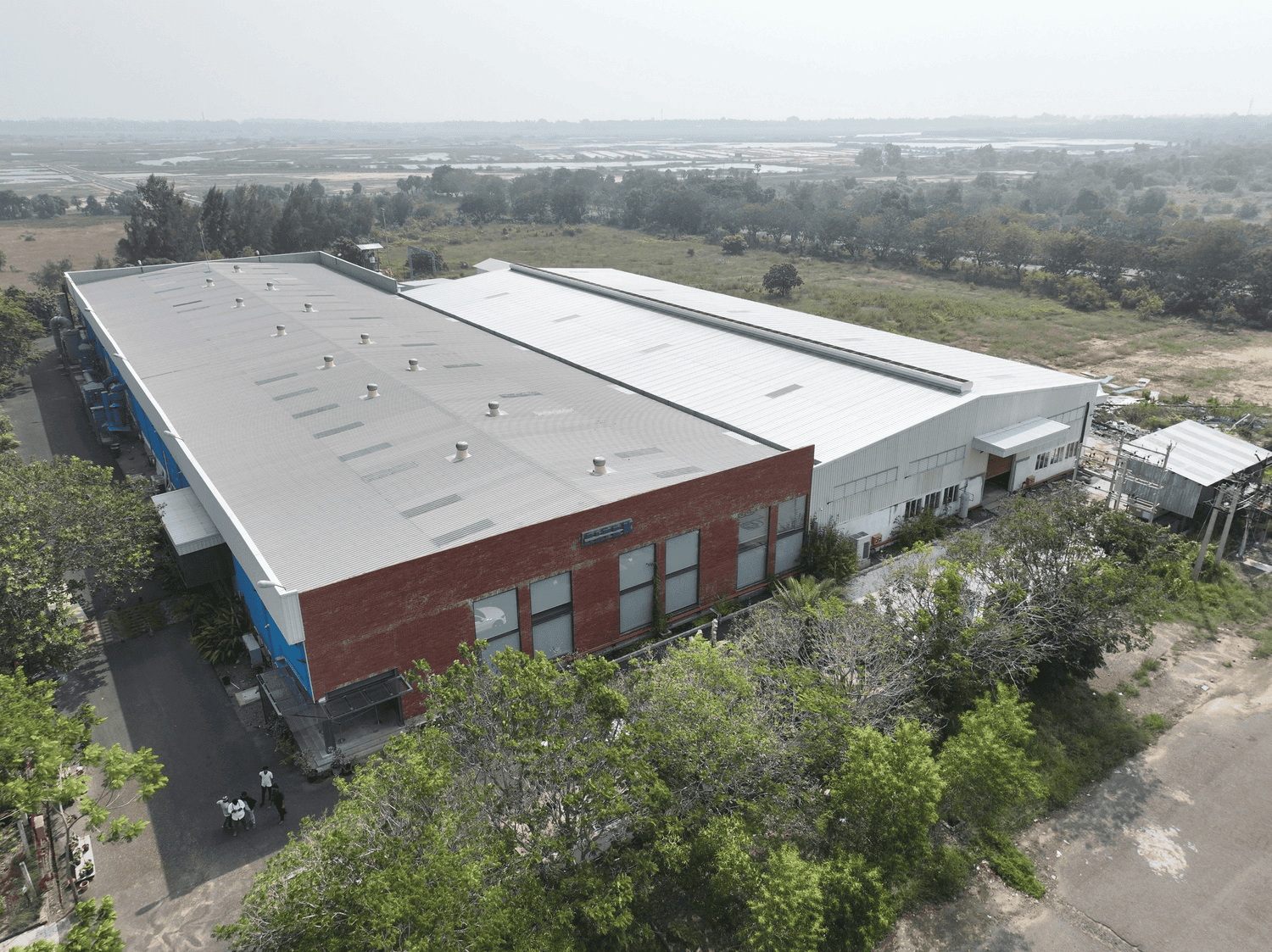
Every Beissel needle is manufactured at our factory in Tamil Nadu using German needle-making technology and Japanese high-carbon steel wire, and passes through 155 quality checks before leaving the factory. In an independent evaluation by SATRA of the United Kingdom, Beissel needles outperformed leading German and Japanese brands.
Many brands make quality claims. BIS certification provides independent verification. That is the difference. 

COMMON QUESTIONS

About BIS Certification and Needle Standards 

What is the difference between IS 15169:2002 and IS 2181:2025?
IS 15169:2002 is the BIS standard for industrial sewing machine needles — the needles used in garment factories, leather goods production, embroidery units, and other commercial sewing operations. IS 2181:2025 is the BIS standard for household sewing machine needles — the 130/705 system needles used in domestic machines such as Usha, Janome, Singer, and Brother. Both standards are aligned with the corresponding JIS standards. Having certification under both is significantly more demanding than certification under either one alone.
What does BIS certification actually check?
BIS certification verifies wire composition, needle straightness, tip hardness, bending performance, chrome plating thickness, eye finish, groove geometry, and overall dimensional accuracy. Certification is not a one-time event. BIS conducts ongoing factory inspections and also purchases certified needles from the open market for independent laboratory testing. A manufacturer cannot obtain certification and then relax quality controls — every batch must continue to meet the same requirements. 
Why does groove design matter so much?
The groove is the only protection the sewing thread has during the fraction of a second the needle is inside the fabric. BIS and JIS specify that groove depth and width must be 40% of the needle diameter. This is achievable only by precision milling. Some manufacturers use a pressed groove — cheaper to produce but unable to achieve the specified dimensions. The result is higher thread breakage, poor stitch quality, and a blade that is thicker than the standard permits, creating larger holes in the fabric.
Is BIS certification the same as ISO certification?
No. ISO 9001 covers a manufacturer’s quality management system — processes and documentation. It does not certify that the product meets any specific technical standard. BIS product certification under IS 15169:2002 or IS 2181:2025 certifies that the needle itself meets defined engineering specifications for materials, dimensions, hardness, and performance. A manufacturer can hold ISO 9001 and still produce needles that fail BIS standards. The two are not equivalent.
Why are so few needle brands BIS certified?
BIS certification requires significant investment in manufacturing infrastructure, testing equipment, quality systems, and ongoing compliance. It also requires transparency — BIS factory inspectors have unrestricted access to production records, testing data, and raw material documentation. Many needle brands operating in India source their products from manufacturers who have not been certified and cannot demonstrate compliance with Indian standards
Does BIS certification apply to all needle types?
IS 15169:2002 covers industrial sewing machine needles across all standard systems — DBx1, HAx1 industrial, UY128, DCx27, and others. IS 2181:2025 covers household sewing machine needles in the 130/705 system. Beissel holds certification under both standards — the only needle manufacturer in India with BIS certification for both industrial and household needles.

BIS Certified. Both Industrial and Household.

IS 15169:2002 · IS 2181:2025 · Made in India. To German Standards.
Items have been added to cart.
One or more items could not be added to cart due to certain restrictions.
- Can't add this product to the cart now. Please try again later.
Quantity updated
- An error occurred. Please try again later.
Deleted from cart
- Can't delete this product from the cart at the moment. Please try again later.