Please Wait . . .
0

Household Sewing · Needle Guide

By - Priya
17.06.26 01:34 PM

The Right Needle Changes Everything. Most Indian Sewers Have Never Had the Choice.

A complete guide to home sewing machine needles — the 15 types, what each one does, and why the needle you are using right now may be the reason your sewing disappoints. You bought a beautiful sewing machine. You watched the YouTube videos. You followed every step. And yet — the stitches skip, the thread breaks, the fabric puckers, the finish disappoints. The machine is fine. The technique is fine. The problem, almost certainly, is a tiny piece of steel you have never thought to question: the needle.
Ask any Indian home sewer what needle they use. Almost everyone will say the same thing: HAx1, size 100/16. The needle that came in the little plastic packet with the machine. The needle the dealer handed over. The needle available at every notions shop in the country. 
t is a perfectly good general-purpose needle. For plain cotton fabric, lockstitch sewing, and standard polyester thread, it does its job. But here is what no one tells you when you buy the machine: the HAx1 100/16 is one needle type, in one size, out of a range of fifteen. It was never designed to sew stretch fabric, silk, denim, leather, metallic thread, or embroidery. It was never intended for overlocking, hemstitching, or quilting through multiple layers.
Yet that is exactly what Indian sewers ask it to do — day after day, project after project. And then wonder why the results do not match what they see on YouTube, where the sewer in the video is using the right needle for the right fabric and the right stitch.

“The machine is not the difference. The needle is.”

This is not a criticism of the HAx1. It is a criticism of the fact that, until now, no other needle type was readily available in India. You cannot use what you cannot buy. Beissel changes that.

THE NEEDLE IS NOT A SIMPLE THING 

A Precision Instrument 

A sewing machine needle is a precision instrument. It penetrates fabric at up to 1,000 times per minute, carrying thread through the material to form a stitch. The shape of the point, the size of the eye, the design of the groove — each determines whether your thread flows smoothly, your fabric is pierced cleanly, and your stitch forms correctly.
There is no single needle that does all of this well for every material and every application. Four distinct variables govern which needle you need, and each one can pull in a different direction. 

FOUR VARIABLES. ONE RIGHT NEEDLE.

Why 15 Types Exist

The 15 types of home sewing needles exist because sewing involves four variables — and the ideal needle must be engineered around all four at once. 

THE MAKERS OF THE MACHINES

Who Builds Schiffli Machines — The Global Manufacturers

Schiffli machines are produced by a small number of highly specialised manufacturers. Understanding who makes the machines matters because it directly determines which needle system is required.
 1. FABRIC 2. THREAD
 Cotton, silk, denim, leather, knit, synthetic, technical Cotton, polyester, rayon, metallic, embroidery, topstitch
3. POINT STYLE 4. STITCH TYPE
 Round, ball, cutting, sharp, acute — each for a different fabric  Lockstitch, overlock, embroidery, quilting, decorative

“Choosing the right needle is the single most important step to getting the best performance from your machine and producing a superior finish on your work.” 

THE COMPLETE RANGE

All 15 Types — What Each One Does and Why

Every needle below is part of the 130/705 system — the universal standard compatible with all home sewing machines sold in India: Usha, Janome, Singer, Brother, and others.

Made in India. To German Standards. 

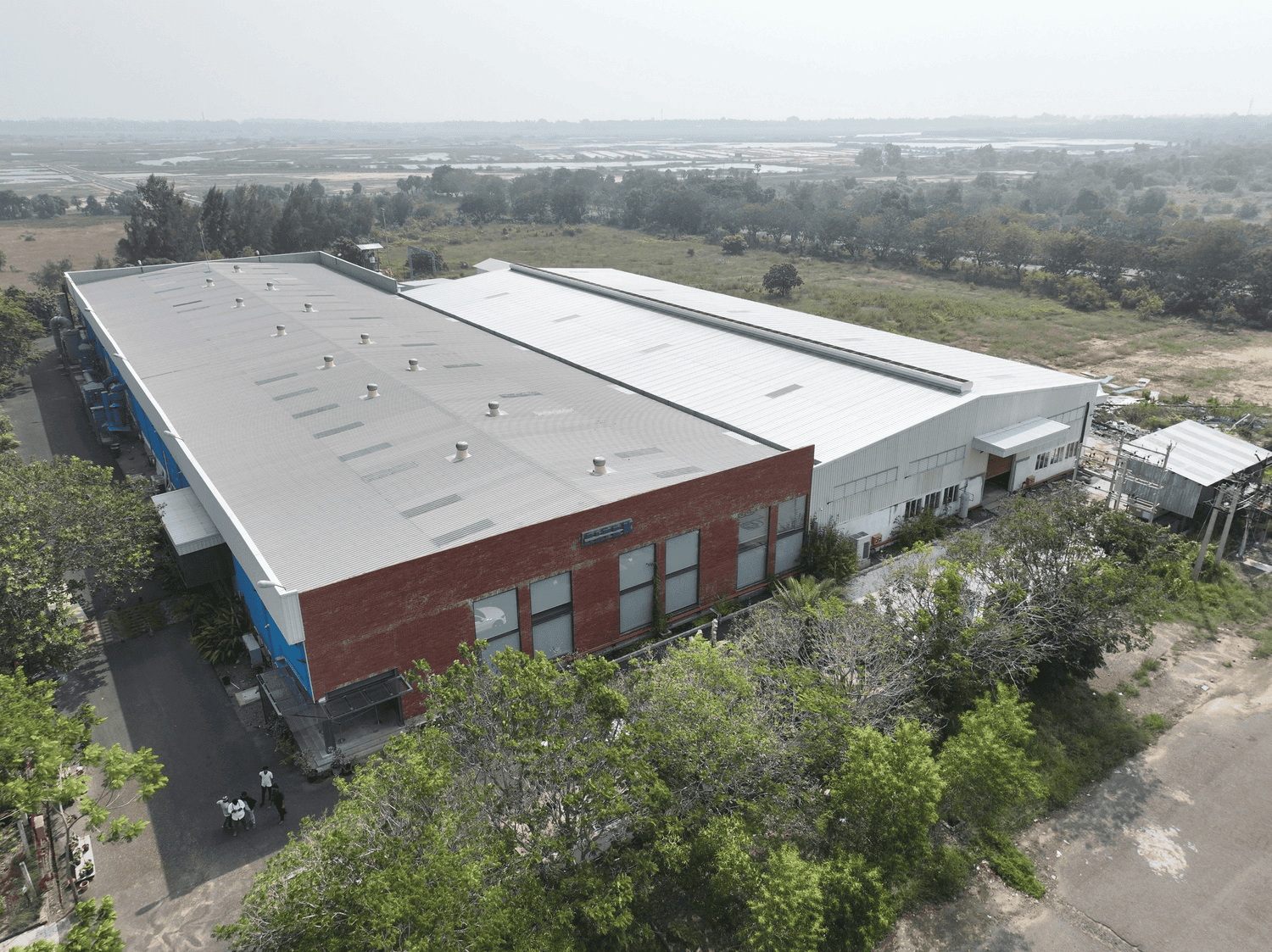
Every Beissel needle is manufactured at our factory in Tamil Nadu using German needle-making technology and Japanese high carbon steel wire. Each needle passes through 155 quality checks. Beissel and King are the only needle brands in India with BIS certification — for both industrial and household needles (IS 2181:2025). In an independent evaluation by SATRA of the United Kingdom, Beissel needles outperformed leading German and Japanese brands.

PLAIN WOVEN FABRICS

HAx1 — Universal 

The general-purpose needle for plain cotton, linen, and polyester woven fabrics with standard thread. This is the needle that comes with your machine

STRETCH & KNIT FABRICS 

HAx1 SUK — Stretch / Jersey 

Ball point slips between fabric fibres rather than piercing them. Essential for jersey, spandex, lycra, and any stretch material.

FINE STRETCH FABRICS

HAx1 SES — Fine Stretch 

Finer ball point for lightweight stretch fabrics — chiffon jersey, silk jersey, fine cotton lycra. More precise than the standard stretch needle.

HEAVY DENIM & CANVAS

HAx1 H-J — Denim / Jeans

Reinforced needle with modified point for penetrating multiple layers of denim, canvas, or heavy upholstery without deflection or breakage. 

SILK, MICROFIBRE & FINE WOVENS

HAx1 H-M — Microtex

Extremely fine, acute point for tightly woven fabrics — microfibre, silk, fine batiste — without distorting the weave

MACHINE EMBROIDERY THREAD

HAx1 H-E — Embroidery

Larger, specially shaped eye protects delicate embroidery threads — rayon, viscose, polyester — from shredding during high-speed stitching.

METALLIC & SPECIALTY THREADS

HAx1 H-MET — Metallic

Elongated, polished eye accommodates metallic thread without friction damage. Clean, unbroken metallic stitching. 

GENUINE & SYNTHETIC LEATHER

HAx1 H-LL — Leather

Cutting point slices cleanly through leather rather than pushing fibres aside. Clean, uniform holes without tearing or fraying.

QUILTING THROUGH MULTIPLE LAYERS

HAx1 H-Q — Quilting

Tapered point and reinforced shaft for stitching through multiple layers and wadding without deflection

TOPSTITCHING & DECORATIVE WORK 

HAx1 H-S — Topstitch 

Extra-large eye for thick topstitching thread. Sharp point for clean, precise stitch placement in visible decorative stitching

PARALLEL DOUBLE STITCHING 

HAx1 H-ZWI — Twin Needle

Two needles on a single shank, producing two parallel rows of stitching in one pass. Ideal for pintucks and jersey hemming.

TECHNICAL & PERFORMANCE FABRICS

HAx1 H-DRI — Dri-Weave

Engineered for moisture-wicking, performance sportswear, and coated fabrics where standard needles cause skipped stitches.

EASE OF USE 

HAx1 H-SD — Self-Threading

Two needles on a single shank, producing two parallel rows of stitching in one pass. Ideal for pintucks and jersey hemming.

HIGH-SPEED & SYNTHETIC FABRICS

EL x 705 CR — Chromium 

Chromium-coated needle runs cooler at high speeds. Reduces heat-related fabric damage and extends needle life

EASE OF USE 

EL x 705 SUK — Overlock Stretch 

If the Schiffli machine is the orchestra, the needle is the instrument. With up to 2,200 needles driving through fabric thousands of times per minute, the needle is under extraordinary mechanical stress. Its design must be exact — for the machine it serves, the thread it carries, and the fabric it penetrates.
Schiffli needles are not interchangeable across machine brands. The two primary needle systems are defined by the machine manufacturer, and using the wrong system will compromise both performance and machine integrity.

THE WORLD HAS KNOWN THIS FOR OVER A DECADE

India Is Just Finding Out.

Beissel Home Sewing needles have been exported to and sought after across all continents for more than ten years. Sewers and dealers in Europe, the Americas, Africa, the Middle East, Southeast Asia, and Australia have long known what Indian sewers are only now discovering — that a Beissel household needle delivers a level of precision, consistency, and finish that transforms the sewing experience.

India’s own needle, trusted by the world, is finally home.”

The same needle that has earned a global reputation for quality is now available in India, on Beissel Shop — manufactured right here in Tamil Nadu, certified by BIS, and priced transparently. You no longer need to import it, request it, or go without. 

A Note for Dealers 

Until now, Indian sewers had no real choice of needle type. Whatever was stocked locally was what they used — and they blamed their machines, their thread, or their technique when things went wrong.
The Beissel Home Sewing range changes this conversation entirely. When a customer comes to you with a sewing problem — thread breakage, skipped stitches, fabric damage — you can now ask the right question: “Are you using the right needle for that fabric and thread?” 
In most cases, they are not. Because until Beissel, the right needle was simply not available in India. Stocking the complete Beissel range means stocking the answer to nearly every sewing problem your customers face.

COMMON QUESTIONS

About Home Sewing Needles

Can I use a HAx1 needle for all types of sewing?
No. The HAx1 is a general-purpose needle for plain woven fabrics with standard thread. It is not designed for stretch fabrics, silk, denim, leather, metallic thread, embroidery, overlocking, or quilting. Using it for the wrong application causes thread breakage, skipped stitches, and poor finish — problems that are almost always blamed on the machine or the sewer, when the needle is the real culprit
Why are there so many types of home sewing needles?
Four variables determine which needle works best: the fabric (cotton, silk, denim, leather), the thread (cotton, polyester, rayon, metallic), the point style (round, ball, cutting, sharp), and the stitch type (lockstitch, overlock, embroidery). Each combination demands a needle designed for it.
Which needle system fits Indian home sewing machines?
All home sewing machines sold in India — Usha, Janome, Singer, Brother — use the 130/705 system. Every needle in the Beissel Home Sewing range is manufactured to this standard. 
What is a BIS certified sewing needle?
BIS certification from the Bureau of Indian Standards confirms that a needle meets the Indian standard IS 2181:2025 for dimensions, hardness, groove geometry, and performance. Beissel is the only needle brand in India with BIS certification for both industrial and household needles.
What needle should I use for knit fabric?
Use the HAx1 SUK (stretch needle). Its ball point slips between the loops of knit fabric rather than piercing the fibres, preventing skipped stitches, runs, and fabric damage. For very fine knit fabric, use the HAx1 SES instead.
How often should I change my sewing machine needle?
Change the needle after every major project, or after 8–10 hours of continuous sewing. A blunt needle is the most common cause of thread breakage and skipped stitches — and the most commonly overlooked. When in doubt, change it.
What size needle should I use?
Size 70–75 for fine fabrics (silk, chiffon); size 80–90 for medium fabrics (cotton, polyester); size 100–110 for heavy fabrics (denim, canvas, leather). Match needle size to both the thread weight and the fabric weight together. 
Can I use industrial needles in my home sewing machine?
No. Home sewing machines use the 130/705 needle system. Industrial machines use different systems — DBx1, HAx1 industrial, and others — which are not interchangeable with household machines.

Meet Priya — Your Needle Selection Guide
Not sure which needle to use? Priya is Beissel’s AI assistant, available on beisselshop.com to answer any question about needle selection, fabric compatibility, and machine setup — any time, instantly. Tell Priya what you are sewing and she will tell you exactly which needle to use.

The Right Needle for Every Project 

Complete Beissel Home Sewing range — BIS certified, made in India, priced transparently. 
Items have been added to cart.
One or more items could not be added to cart due to certain restrictions.
- Can't add this product to the cart now. Please try again later.
Quantity updated
- An error occurred. Please try again later.
Deleted from cart
- Can't delete this product from the cart at the moment. Please try again later.